Lost Pet Guide for Québec: What to Do When Your Pet Is Missing
Lost a pet in Québec? Acting quickly and searching strategically can improve your chances of bringing them home. Follow this step-by-step guide for the first hour, the first 24 hours, and the days ahead—then use the search tips for your pet's species.
Written by the ResQPaw team
Updated July 14, 2026

What to Do in the First Hour
Begin close to the last known location. Frightened pets may hide nearby, remain silent, or run when approached.
- Search the immediate area slowly, checking under, behind, and inside possible hiding places.
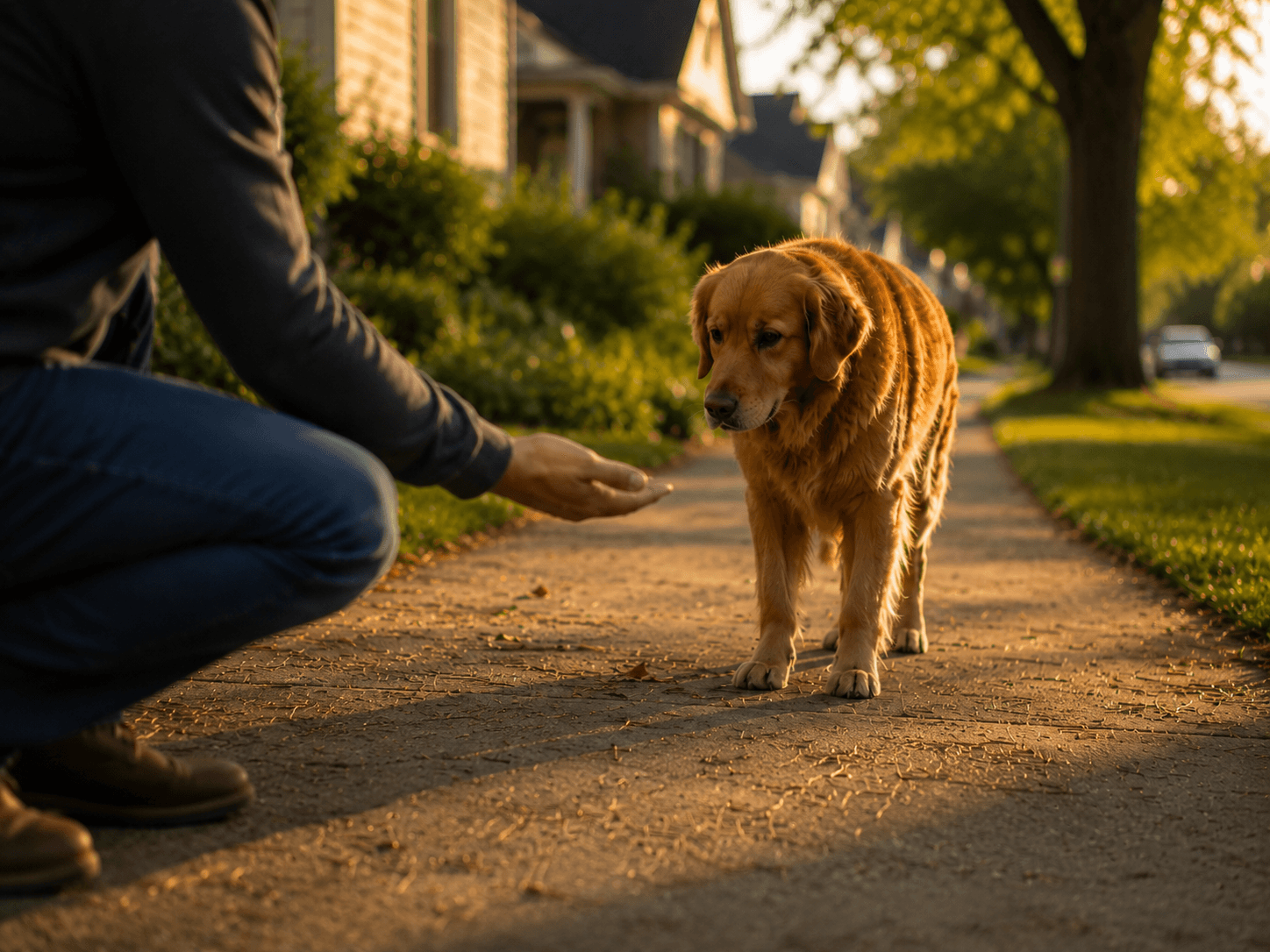
- If you see your pet, do not chase. Stay low, turn sideways, and use a calm voice or food.
- Ask neighbours to check garages, sheds, decks, stairwells, and parked vehicles.
- Keep someone near the escape point, when safe, while others search.
A frightened dog may run even from their family, while a missing cat may remain hidden and silent nearby. Calm, methodical searching is therefore stronger advice than repeatedly calling or pursuing the animal.
What to Do in the First 24 Hours
- Create a lost pet report on ResQPaw with recent photos, the exact location and time, distinctive markings, and your pet's temperament.
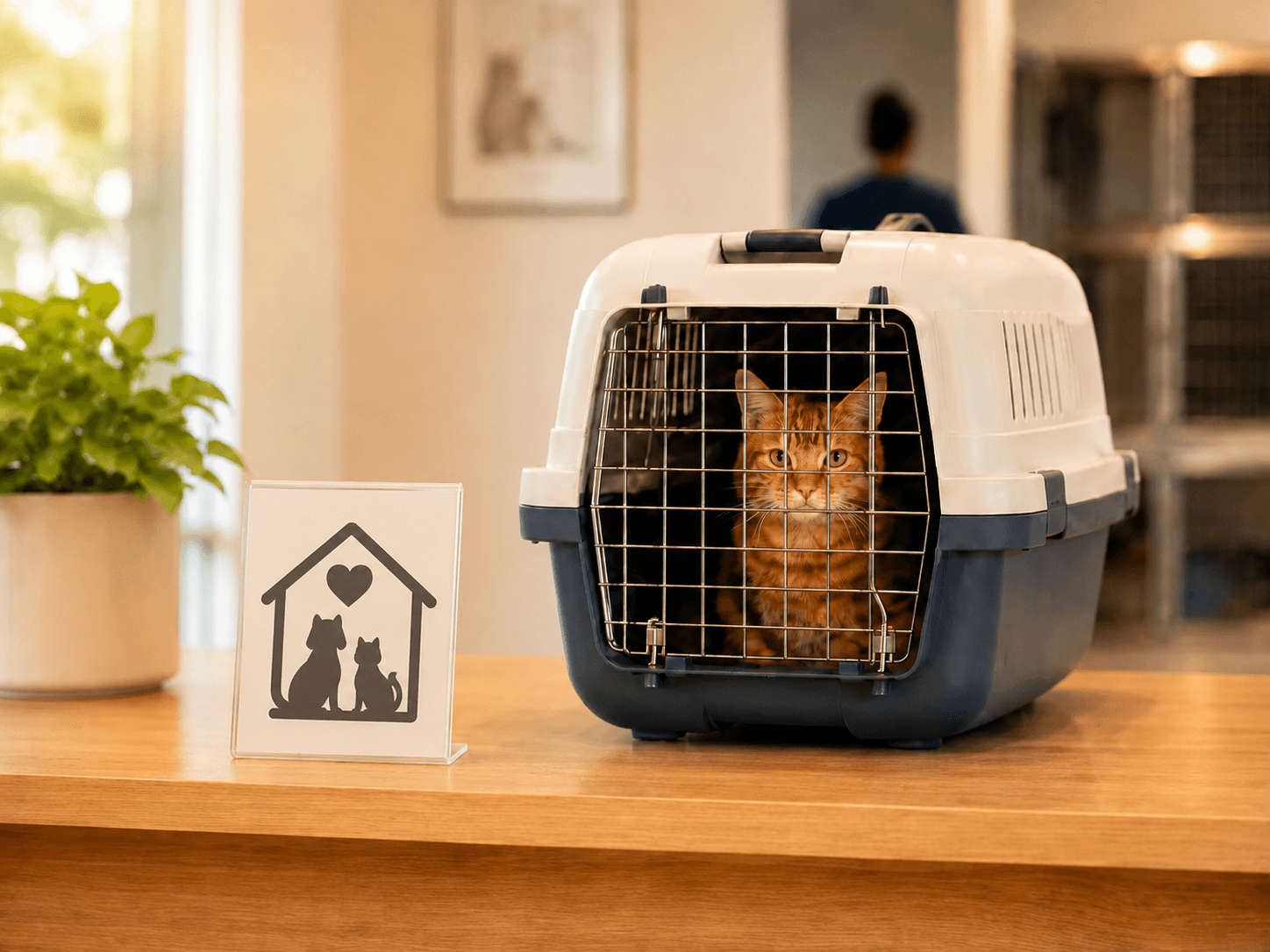
- Contact your municipal animal service and every shelter serving your area.
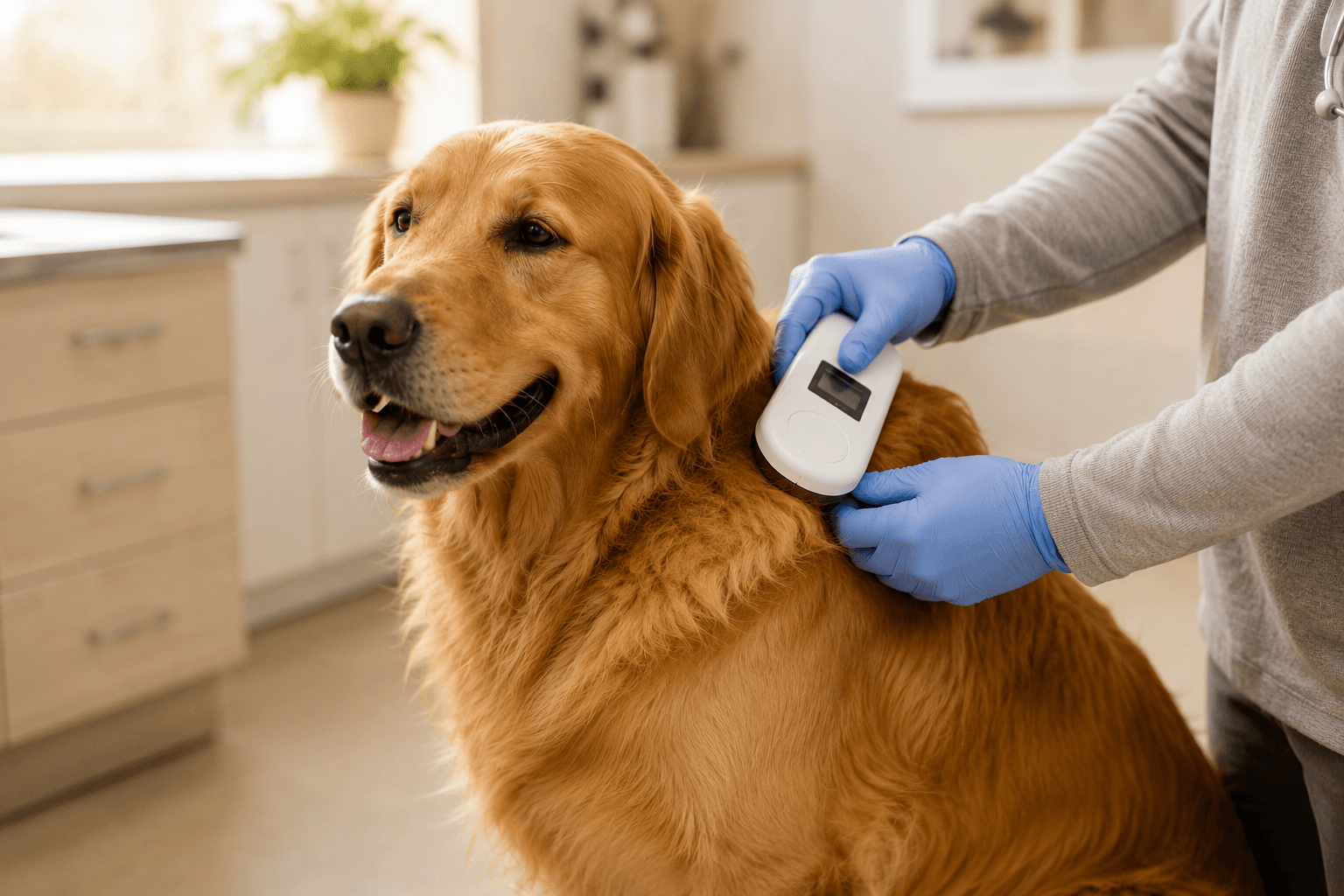
- Mark the microchip as lost and confirm that your phone number and email are current.
- Tell immediate neighbours and share your ResQPaw report with local community groups.
Act quickly: Shelter holding periods can be short and vary by municipality. Contact the appropriate shelter immediately.
What to Do During Days 2–7
- Recheck shelter intake and adoption pages, and follow up directly.
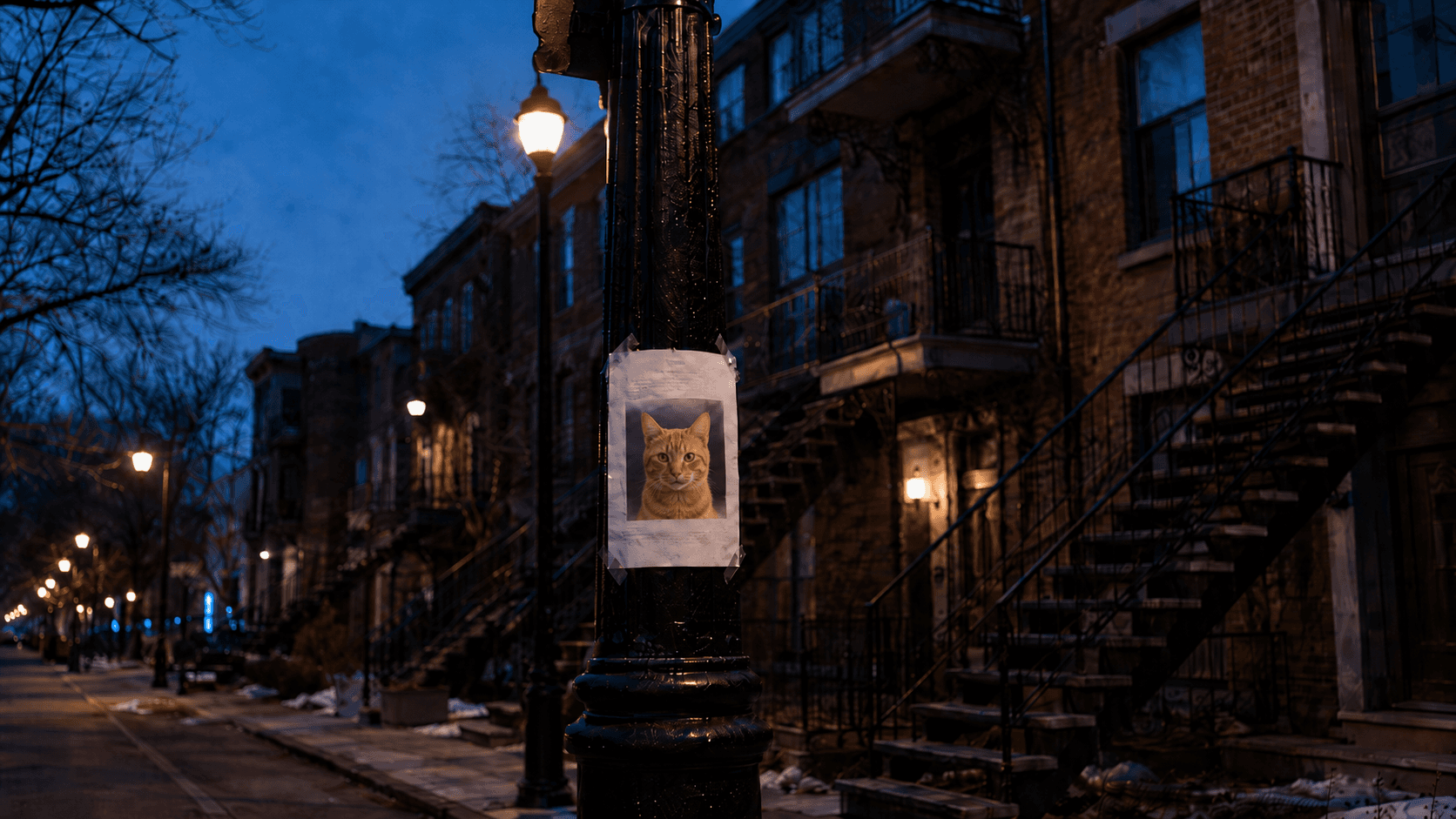
- Refresh your flyers and keep your ResQPaw report updated with confirmed sightings, new photos, and any change to your contact information.
- Record each sighting's time, location, direction, and any photo or video.
- Expand the search gradually based on confirmed sightings and your pet's species.
Keep Searching and Following Up
Keep your report active and repeat the search. New sightings and shelter intakes may happen later.
How to Find a Lost Pet by Species
Cats, dogs, birds, small animals, and reptiles behave differently when lost. Choose your pet's species for more targeted search advice.
 How to Find a Lost Cat
Indoor cats often hide close to the escape point and may not respond when called.
- Search under decks, porches, stairs, sheds, cars, bushes, and window wells.
- Ask neighbours to physically inspect their properties rather than simply looking from a window.
- Search again when the area is quiet, using a flashlight to inspect dark spaces.
- If your cat is seen but will not approach, stop pursuing them and consider a monitored food station, camera, or humane trap with shelter guidance.
- Consider placing used litter outside: the familiar scent can help guide your cat home, though it may also attract other territorial animals. Pair it with a monitored food station or humane trap, and keep checking nearby hiding places.
 How to Find a Lost Dog
A frightened dog may run from familiar people, so sightings are more useful than pursuit.
- Add "DO NOT CHASE" to flyers and sighting instructions.
- If spotted, stop moving, turn sideways, avoid direct eye contact, and sit or crouch.
- Toss food beside the dog rather than walking directly toward them.
- Ask witnesses for the exact time, location, direction of travel, and a photo if safe.
- For repeated sightings, work with animal services or a rescue on a monitored feeding station or humane trap.
 How to Find a Lost Bird
Lost birds often seek elevated perches, making rooftops, balconies, trees, and utility lines important search areas.
- Search nearby trees, roofs, balconies, wires, gutters, and other elevated perches.
- Keep visual contact whenever possible and avoid startling the bird into flying farther.
- Place their empty cage outside in a visible, safe location with familiar food and toys.
- Use familiar words, whistles, calls, or sounds.
- If using another bird as a lure, keep that bird securely caged and supervised at all times.
- Notify shelters, avian and exotic veterinarians, bird rescues, and local bird groups.
 How to Find a Lost Rabbit, Ferret, or Small Pet
These animals often disappear into very small, sheltered spaces.
- Search indoors thoroughly before assuming they escaped, especially for ferrets.
- Check inside furniture, bedding, drawers, cabinets, vents, behind appliances, and beneath stairs.
- Outside, search close to home under decks, sheds, bushes, and along foundations.
- Do not chase a loose rabbit. Move calmly and use exercise pens or barriers to enclose the area gradually.
- Use familiar food and ask neighbours to check garages and sheds before closing them.
 How to Find an Escaped Reptile
Escaped reptiles usually seek warm, dark, enclosed areas and may remain hidden for long periods.
- Search the enclosure room first, then clear the home one room at a time.
- Check warm, dark, tight areas behind appliances, beneath furniture, inside closets, and around laundry.
- If the animal reached outdoors, inspect nearby walls, rocks, decks, garages, and sheltered spaces.
- Ask neighbours to contact you rather than handling an unfamiliar reptile.
- Notify exotic veterinarians, reptile rescues, shelters, and nearby pet stores.
Frequently asked questions
Shelters & timing
How long do shelters keep found animals?
Holding periods vary by municipality. Contact the shelter immediately and check its intake listings regularly. In areas served by the Montréal SPCA, the period may be 24 or 72 hours depending on whether the family can be identified and notified.
What if my pet is listed for adoption?
Contact the shelter immediately. Bring proof of ownership such as photos, veterinary records, licence information, microchip details, or adoption papers.
What if my pet is hiding in winter?
Search sheltered spaces such as garages, sheds, stairwells, under decks, near building vents, and around parked vehicles. Ask neighbours to inspect these areas before closing or moving anything.
How often should I contact local shelters?
Check in every few days, and visit in person when you can — a phone description can miss an animal that staff wouldn't otherwise connect to your pet. Because holding periods can be short, regular contact matters.
What proof of ownership should I bring to a shelter?
Bring recent photos, veterinary or adoption records, licence information, and microchip details. Anything that ties you to the animal helps staff release them to you more quickly.
Microchips & ID
Will I be contacted automatically if my pet is microchipped?
Not necessarily. The chip must be scanned, and its registry information must be current. Mark your pet as lost and verify your contact details.
Can a microchip help locate a missing pet?
A microchip can't track or locate your pet — it isn't a GPS device. It identifies your pet once a shelter, clinic, or animal service scans the chip, so keep its registry information current.
My pet has no chip or tag. Is it hopeless?
No. Recent photos, distinctive markings, an exact location, active shelter checks, and ResQPaw's photo matching can still help identify a potential match.
Searching by species
How far can a lost cat travel?
Indoor cats that get out usually stay very close — often within a few houses — and hide silently rather than roaming. Search your immediate area thoroughly and repeatedly before widening it.
Should I leave food or a litter box outside for a missing cat?
Yes — a small amount of familiar food at a monitored station can help, and used litter's familiar scent may help guide your cat home. Keep in mind that scent can also attract other territorial animals, so a camera or humane trap near the station is more reliable than scent alone.
What should I do if I see my lost dog but they run away?
Don't chase. Stop, turn sideways, avoid eye contact, and crouch low; toss food to the side rather than approaching. Note the time, location, and direction, and set up a monitored feeding station for repeated sightings.
Safety & scams
Should I offer a reward?
A reward may attract attention, but protect yourself from scams. Never send money or verification codes before seeing proof. Ask for a current photo or an identifying detail that was not published.

Start Your Lost Pet Search Across Québec
Create a free ResQPaw report so your pet can be compared with found-pet reports and seen by people searching nearby.
Create a Lost Pet ReportKeep reading