Pet Microchips and Identification in Québec
A pet microchip can help a shelter or veterinary clinic identify your animal after they are found — but a chip only works when it is scanned and the registration information is current. This guide covers how microchips work, what Québec pet owners should know, and how to keep your pet's identification up to date.
Written by the ResQPaw team
Updated July 14, 2026
What a pet microchip is — and what it is not
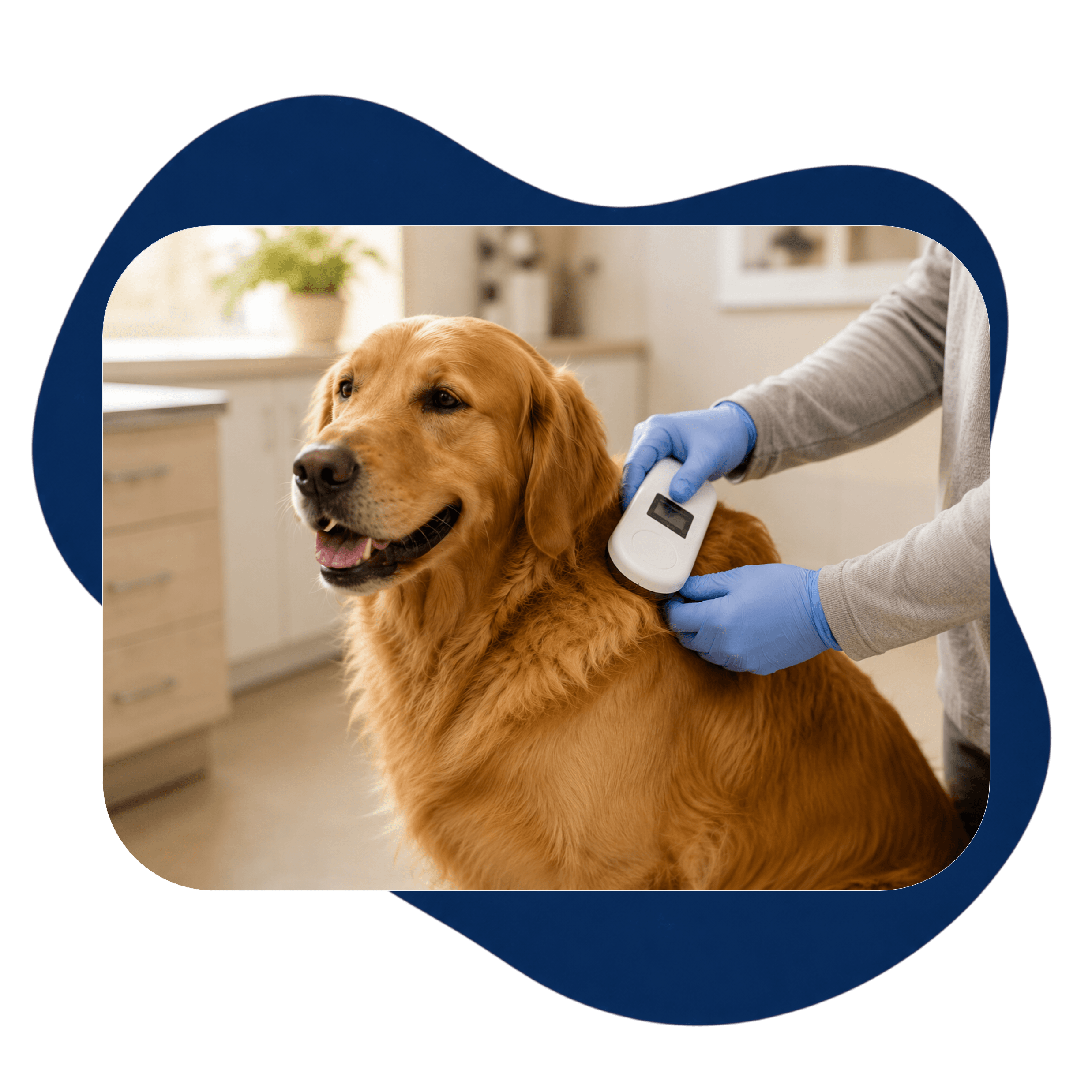
A microchip is a small identification device implanted beneath your pet's skin. It stores a unique identification number linked to a registry record containing the owner's contact information.
A microchip is not a GPS tracker and cannot show your pet's location. It can only help identify them after a shelter, veterinary clinic, or animal service scans the chip.
Microchip and pet ID rules in Québec
Pet identification requirements vary by municipality. Some cities require dogs, cats, or both to be microchipped, licensed, or registered with the municipality.
In Montréal, pet owners must follow the city's identification and permit requirements. Elsewhere in Québec, check with your municipality to confirm the rules that apply in your area.
Even where a microchip is not mandatory, combining a registered chip with a visible collar tag gives your pet more than one way to be identified.
Keep your pet's microchip registration current
- Ask which registry holds your pet's microchip record and save the registry name and chip number.
- Update your address, phone number, and email whenever they change.
- After adopting a microchipped pet, transfer the registration into your name.
- If your pet goes missing, mark them as lost with the registry as soon as possible.
- Ask your veterinarian to scan the chip during routine visits to confirm that it can still be read.
Outdated or incomplete registration is one of the most common reasons a microchip does not lead to a reunion.
Microchips work best with other forms of pet ID
A collar tag can help a neighbour contact you immediately, without taking your pet to be scanned. A microchip provides permanent identification if the collar or tag is lost.
For the best protection, use all three:
- A visible collar tag
- A registered microchip
- An active ResQPaw lost or found pet report
Frequently asked questions
How chips work
Does a pet microchip track location?
No. A microchip is not a GPS device and does not transmit your pet's location. It stores an identification number that can be read with a compatible scanner.
Is microchipping painful or risky?
Microchipping is usually a quick procedure similar to receiving a vaccination. Mild discomfort may occur, and complications are uncommon. Speak with your veterinarian if you have concerns about your pet's health or size.
Can a microchip stop working?
Microchips are designed to last for the pet's lifetime, but scanning or registry issues can still occur. Ask your veterinarian to scan the chip during regular checkups and keep the registration current.
Registration & upkeep
How do I find my pet's microchip registry?
Start by checking veterinary records, adoption documents, or previous registration emails. A veterinary clinic or shelter can also scan the chip and help identify the registry associated with the number.
I adopted a pet that is already microchipped. What should I do?
Confirm that the chip is registered in your name and that your current phone number, email, and address are listed. Contact the registry to complete an ownership transfer if necessary.
What should I do if my microchipped pet is lost?
Mark your pet as lost with the microchip registry, confirm your contact details, notify local shelters and animal services, and create a lost pet report on ResQPaw.

A microchip helps after a scan. A report helps people search now.
Create a free ResQPaw report to make your lost or found pet visible across Québec.
Create a Free ReportKeep reading